 Por Nicole Iporre
Who is Jose Antonio Kast, the new President of Chile?
Six years after a social uprising demanding social improvements and after four years of a left-wing government that failed to deliver the reforms it promised, the Republican candidate managed to prevail after his third presidential bid.
Lee una versión en español de este artículo en este link.
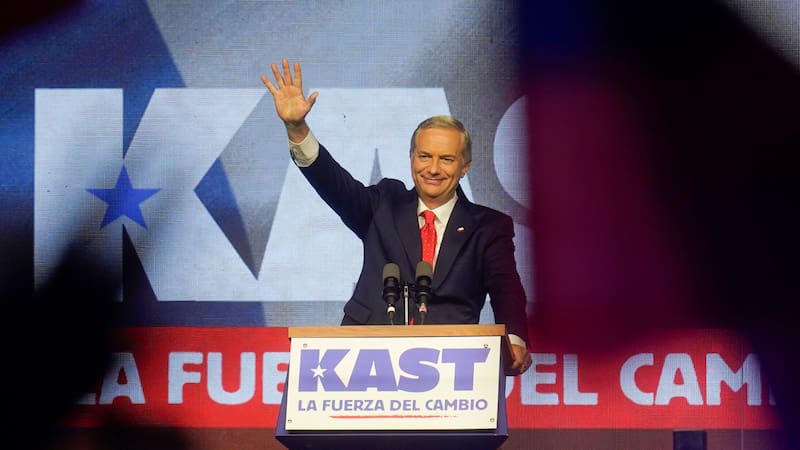
For the republican Jose Antonio Kast, the third attempt proved successful. Polls predicted that he would be the next president of Chile, after having competed twice before for the presidency, in 2017 and 2021. And they were not wrong.
This Sunday, December 14th, he faced off at the ballot box against the ruling party candidate Jeannette Jara (member of the Communist Party). Two government program proposals that, by nature, have completely different approaches.
The 59-year-old lawyer and former congressman has become the favorite among many voters for his more radical stance, emerging amid latent tensions over the growing migration crisis, crime, and the perception of insecurity in the country.
Raised in Buin (a town in the Metropolitan Region) by his German roots, with the influence of his brother Miguel Kast and Jaime Guzman, the republican has forged an extensive political career that has always orbited around the right-wing.
Here are the milestones of his political life.
Kast’s Family History and German Roots
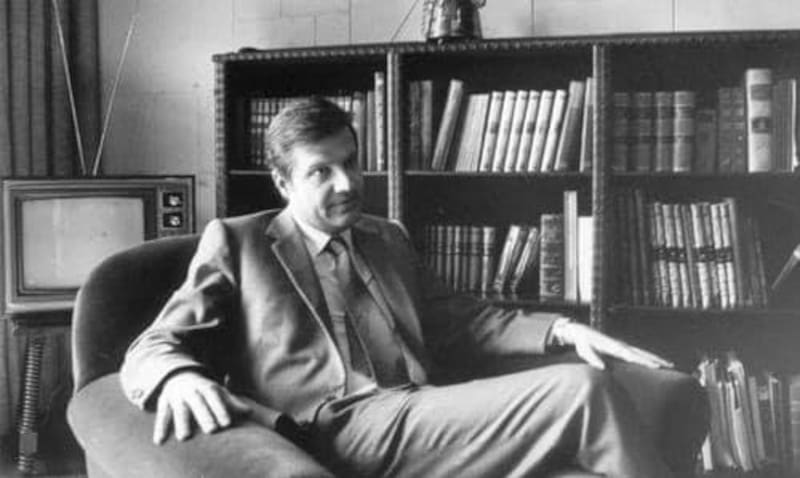
On January 18, 1966, José Antonio Kast Rist was born in Santiago. His parents, Michael Kast and Olga Rist —German immigrants who arrived in Chile in 1950— moved to Buin (a town located approximately 35.5 km south of Santiago) where they raised their ten children.
One of them, José Antonio’s elder brother, was Miguel Kast Rist, one of the economists trained at the University of Chicago who later became a minister and president of the Central Bank under Augusto Pinochet’s military regime.
Kast has expressed admiration for his brother’s legacy in the Chilean economy. Miguel passed away in 1983 from cancer, but his trajectory is still mentioned as a reference point that influenced the presidential candidate and his economic and political convictions.
Gremialismo
In 1984, Jose Antonio Kast began studying Law at the Pontificia Universidad Católica de Chile. A year later, he became part of the Movimiento Gremial (Gremial Movement), founded by Jaime Guzman, a key collaborator of the regime and the country’s current Constitution.
The Gremialismo proposed by Guzman was revolutionary at the time, when the political debate was dominated by the Pinochet’s dictatorship. It started to attract right-wing adherents who went on to become relevant figures in national politics and members of the Unión Demócrata Independiente (UDI, a conservative, right-wing political party in Chile).
Several gremialistas were also part of the opposition to the government of socialist Salvador Allende.
The relationship with Jaime Guzman

With his proximity to gremialismo, Kast’s first steps in politics were guided by Jaime Guzman. In 1996, he formally joined the UDI, the party founded by Guzman.
The presidential candidate declared that he had a close friendship with Guzman: “I shared a lot with him, my wife was his student (...)”, he said in conversation with T13 Radio in October.
Under that banner, the republican candidate launched his first political adventure that same year: he was elected as a councilor in Buin, his hometown district in the Metropolitan Region, a position he held until 2000.
With a little more experience, he decided to run for the Congress for District 30 (comprising the towns of San Bernardo, Calera de Tango, Buin, and Paine). He represented the UDI in that position for three consecutive terms, from 2002 to 2014.
In the meanwhile, he tried to become the party’s president but lost to Juan Antonio Coloma.
The Fight Against the UDI’s “Colonels”
Coupled with other tensions with the UDI’s historical leaders, also called the “colonels”, José Antonio Kast resigned from the party in 2016 after 20 years of militancy.
In a letter addressed to the gremialista rank and file, he criticized the management of the board and the lack of training for young people. For Kast, the direction the party was taking was incorrect. “The flame of hope to renew the UDI went out in me”, he wrote.
“I could not remain indifferent when I felt that the UDI I joined began to move away from its founding project, from its fundamental base, and that it slowly transformed into something very different, dominated by an eagerness to ‘be the biggest party’ at any cost. And we have paid that cost.”
He also mentioned that he had presidential aspirations that did not align with those of the party.
This opened the door for Kast to create a political alternative to the traditional right, a change that, he assured in an interview with the media, would be the path Jaime Guzman would also take if he were alive.
Founding the Republican Party of Chile
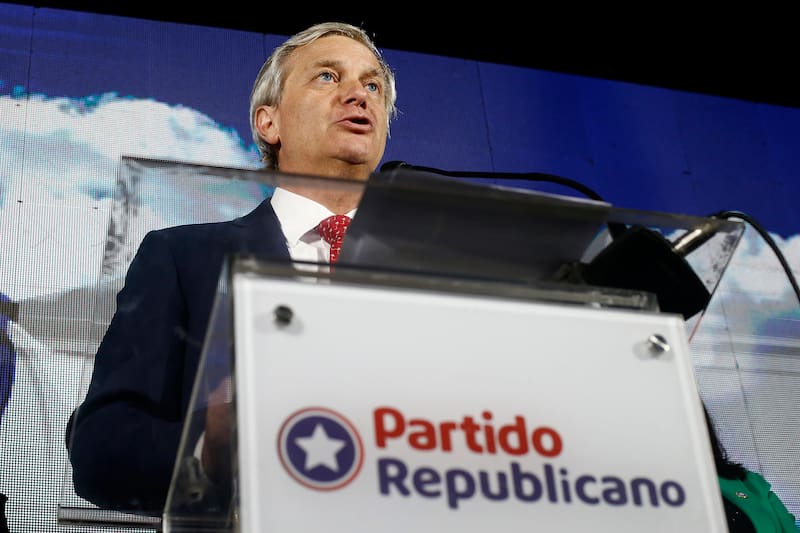
In 2017, without a party, Jose Antonio Kast registered his first presidential candidacy as an independent. He obtained 7.93% of the votes and was placed fourth out of eight candidates.
A year later, the Republican Action movement was born, which officially became the Republican Party of Chile in 2019. Kast was its founder.
Former UDI members —who agreed with Kast’s criticisms of the party— joined his Republican board, including Javier Leturia Mermod, Ignacio Urrutia Bonilla, Arturo Squella Ovalle, among others.
With this significant change, Kast’s discourse hardened, especially regarding security and migration. His focus quickly became much more conservative than that of other parties on the Chilean right.
The Back and Forth with Sebastián Piñera
In 2017, when Kast first ran for president and came in fourth place, the runoff election was contested between the former President Sebastián Piñera (Chile Vamos coalition) and Alejandro Guillier (New Majority coalition).
At first, he supported Piñera to try to unify the right-wing vote. However, over time, Kast decided to distance himself from “Piñerism” (Piñera’s brand of pragmatic, center-right politics) and took on the role of a critical voice during his term.
This was especially true in 2020, after the president Piñera promoted the constitutional process—to write a new Constitution in Chile. The republican then formally declared himself in opposition to the Piñera government.
“This government will have no legacy. Piñera will go down in history as the worst President of the last 30 years, because he has broken his word time and time again,” he accused in 2021, on Canal 13’s Mesa Central program.
The Triumph of the Republicans
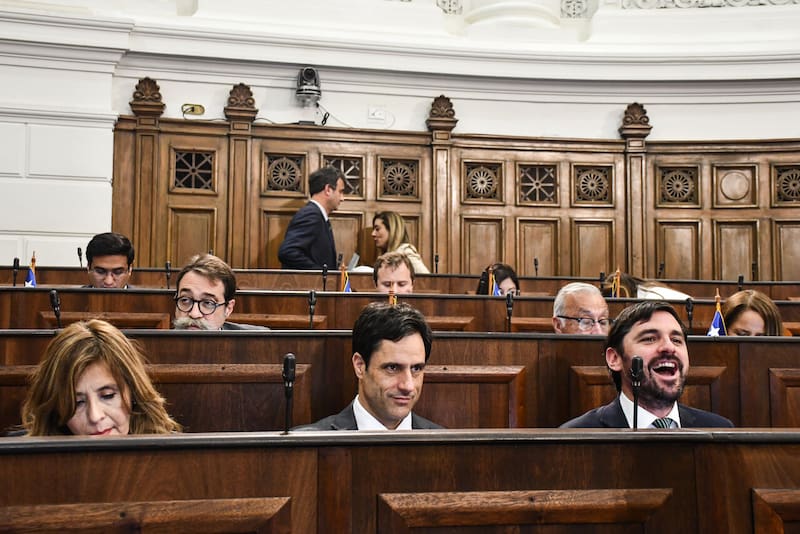
On May 7, 2023, the Republican Party had a crushing victory: it was the political force with the largest presence in the Constitutional Council, the body composed of 50 councilors elected by popular vote who were to draft a new Constitution project for Chile.
They secured 22 seats (43.1% of the Council) and positioned themselves as a leading party, compared to other parties in the sector. To give an idea, the UDI was left with 6 seats, RN with 4, and Evópoli with 1.
Thus, the republicans cemented their step as an important actor in the political debate, which would end up imposing itself on the traditional right once again.
Kast’s Political Views and Proposals
A conservative and hardline politician. That is how international media have categorized Jose Antonio Kast, after he advanced to the run-off election this 2025 and moved closer and closer to the presidency of Chile.
Kast, without mincing words, has said he opposes legal abortion, questions equal marriage, and plans to promote stricter policies on migration and public order.
In his campaigns, he has promised to install trenches on Chile’s borders with Bolivia and Peru to further obstruct the passage of irregular immigrants, and he called on undocumented foreigners to “self-deport” from the country. He told them their days were numbered.
He also proposed a fiscal adjustment of $6 billion in 18 months, although he has not yet explained how he could achieve it. The opposition fears that, if elected, his strategy will affect social security programs such as the Universal Guaranteed Pension (Pensión Garantizada Universal - PGU) and other social benefits.
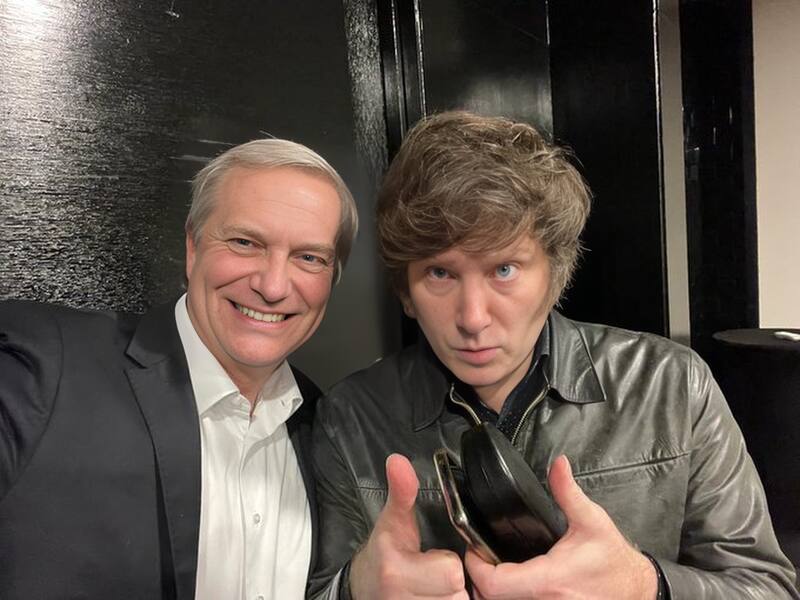
In his speeches, he has declared himself an admirer of far-right leaders and their policies, including Donald Trump (USA), Javier Milei (Argentina), Giorgia Meloni (Italy), and Nayib Bukele (El Salvador).
With his wife, Maria Pia Adriasola, Kast held his campaign closing event in La Araucanía (a conflict-affected region in Southern Chile, a long dispute with the Indigenous people). With his team and members of the Republican Party behind him, he assured that they are in “a crusade to recover peace, order, and justice in our country”.
COMENTARIOS
Para comentar este artículo debes ser suscriptor.
Lo Último
Lo más leído


Plan digital + LT Beneficios por 3 meses
Comienza el año bien informado y con beneficios para ti ⭐️$3.990/mes SUSCRÍBETE